
service lifepredictive maintenance
Keys to Asset Life Extension Through NDT
Discover how a well-planned Non-Destructive Testing program can maximize the service life of your equipment, reduce costs, and prevent unexpected failures.
Read more
During a routine inspection, an area with thickness loss due to corrosion is detected in a tank or pipe. The first reaction may be to plan a costly repair or replacement. However, there is an engineering approach that allows for a more informed and cost-effective decision: the Fitness-For-Service (FFS) assessment.
API 579-1/ASME FFS-1 is a standard that provides engineering assessment procedures to analyze the integrity of in-service equipment that has defects or damage, such as corrosion. In essence, an FFS analysis answers the question: "Despite this defect, is the component safe to continue operating?"
An FFS analysis is not guesswork; it is based on precise data about the actual condition of the component, which is provided by Non-Destructive Testing:
The result of an FFS analysis can be:
Offering NDT services for FFS assessments positions us as a strategic partner. We don't just find problems; we provide the quantitative data that allows our clients to manage the integrity of their assets in the safest and most economical way possible.
At Compañía Técnica this translates into concrete work: API 653 inspections and industrial ultrasonic testing, carried out with our own equipment, deployable anywhere in Argentina, and a report signed by a technical representative registered with the Energy Secretariat. The full catalogue of audits sets out the scope of each one.
Discover how a well-planned Non-Destructive Testing program can maximize the service life of your equipment, reduce costs, and prevent unexpected failures.
Read more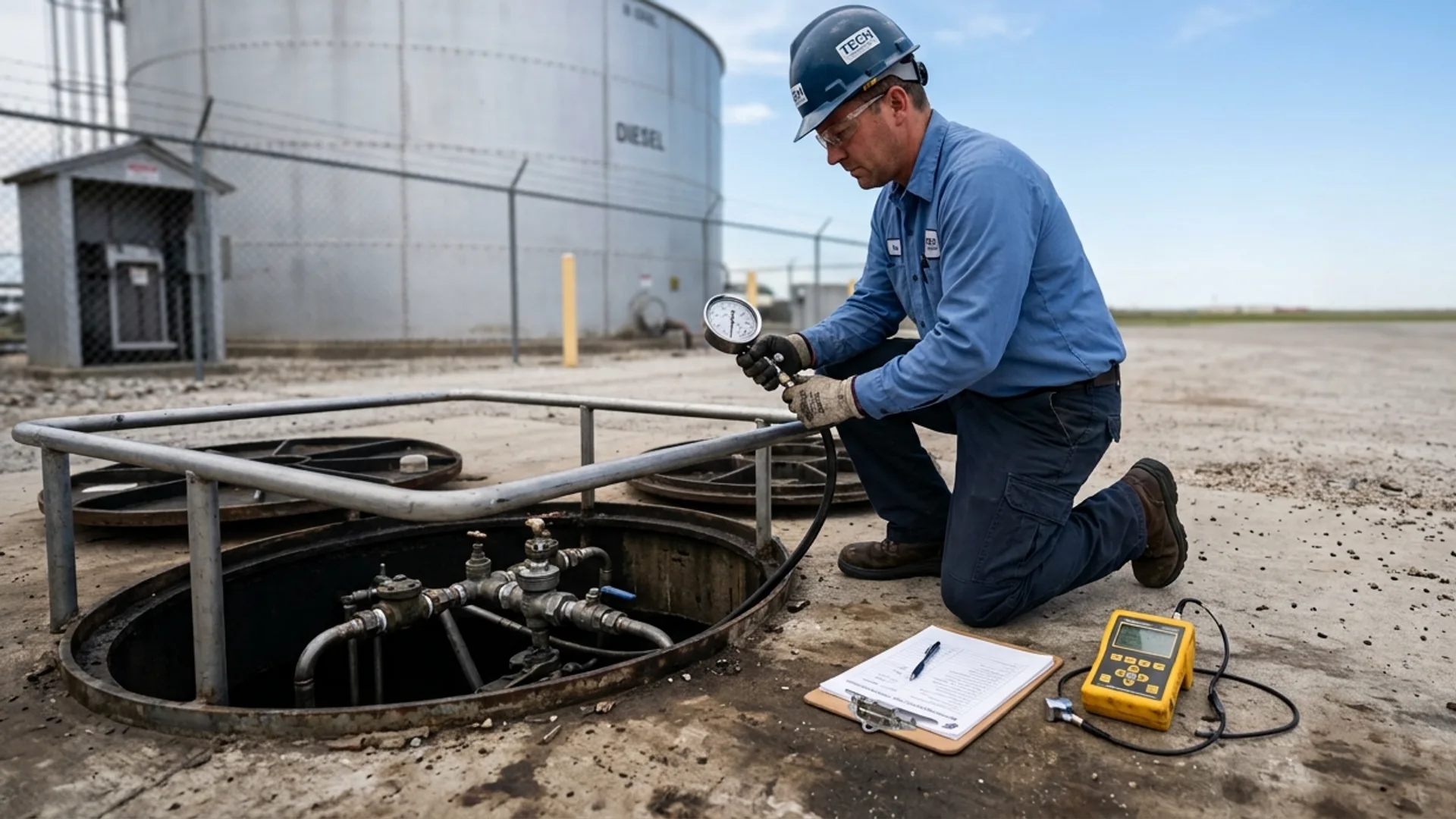
We are registered in the Register of Auditing Entities of the Secretariat of Energy, under categories A-I, A-II, B-I and B-II. What this means for your service station or plant.
Read more
Resolution 785/05 is repealed. The new Resolution 277/2025 adopts the API 653 standard. Discover what this means for your company and how we can ensure your compliance.
Read more