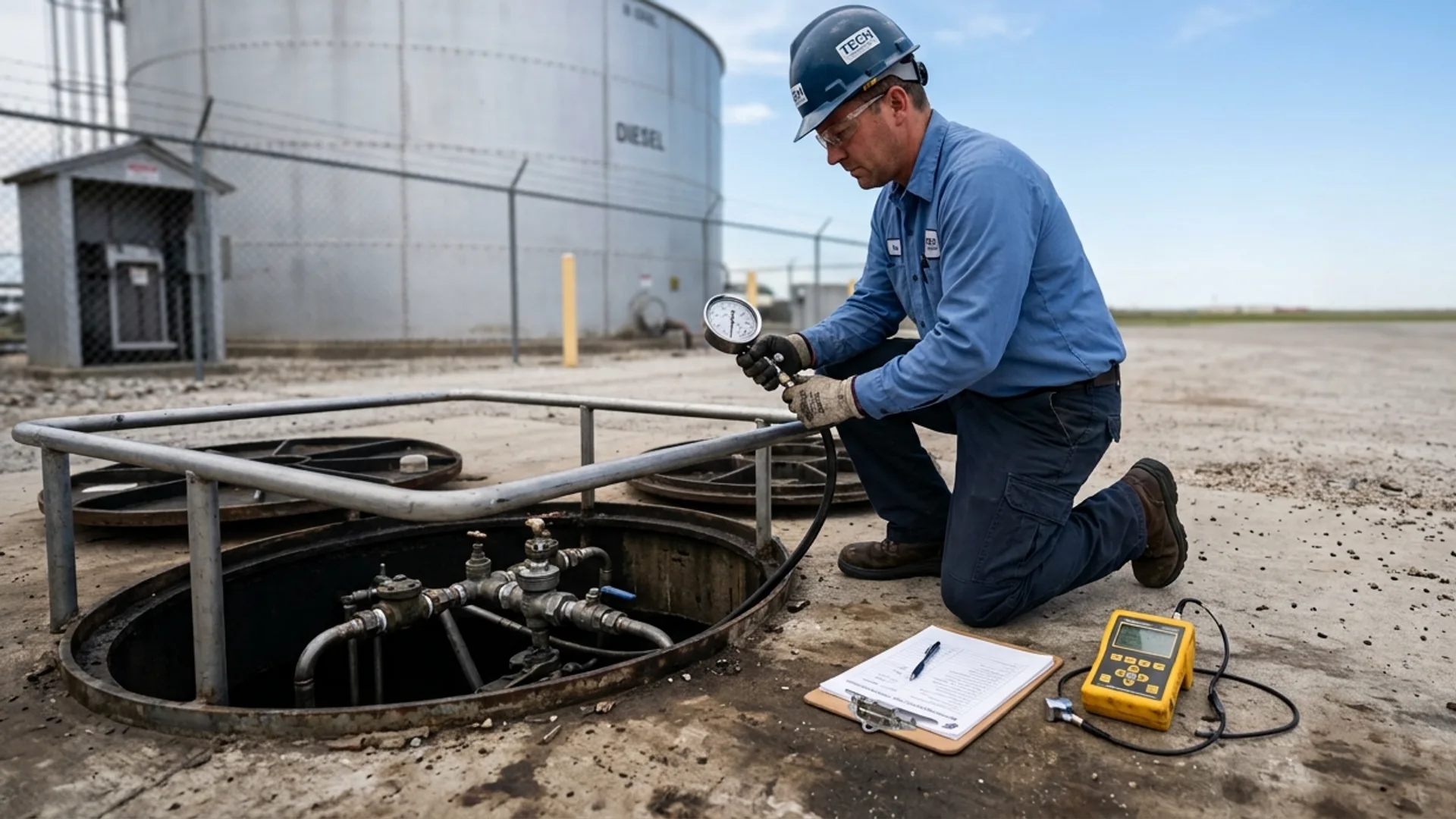
Private Auditor Authorised by Argentina's Energy Secretariat
We are registered in the Register of Auditing Entities of the Secretariat of Energy, under categories A-I, A-II, B-I and B-II. What this means for your service station or plant.
Read moreArticles, news and analysis on industrial inspection and non-destructive testing.

We are registered in the Register of Auditing Entities of the Secretariat of Energy, under categories A-I, A-II, B-I and B-II. What this means for your service station or plant.
Read more

Resolution 785/05 is repealed. The new Resolution 277/2025 adopts the API 653 standard. Discover what this means for your company and how we can ensure your compliance.
Read more
An analysis of NDT methods, such as PAUT and Radiography, and API 1104 acceptance criteria to ensure safety in gas and oil pipelines.
Read more
An in-depth analysis of how Phased Array Ultrasound technology is transforming inspections, offering speed, precision, and comprehensive data.
Read more
We explore NDT requirements for welds in pressure vessels and boilers according to the ASME BPVC Section VIII code, a pillar of industrial safety.
Read more
Has corrosion been detected? All is not lost. Learn how NDT data feeds a Fitness-for-Service (FFS) analysis to make safe and cost-effective decisions.
Read more
Discover how a well-planned Non-Destructive Testing program can maximize the service life of your equipment, reduce costs, and prevent unexpected failures.
Read more
Not all tests are equal. Understand why the IRAM-ISO-9712 certification of our personnel is a pillar for the reliability and precision of our services.
Read morePersonnel qualification is accredited under IRAM-ISO 9712. For storage tanks the reference standard is API 653, for pipeline welds API 1104, and for pressure vessels the applicable sections of the ASME code. The local regulation requiring these inspections is issued by Argentina’s Energy Secretariat.
It repealed Resolution 785/05 and adopted the API 653 standard for hydrocarbon tank inspection, with firm compliance deadlines. In practice it means inspection frequency now depends on the corrosion rate measured on each tank rather than on a fixed interval.
We publish when there is a relevant regulatory change or a technical case that adds something concrete, rather than following a fixed calendar. Each note states its publication date and the date it was last updated.